

No products in the cart.
Dressing for the Tropics: How to Choose the Right Cloth for Your Bespoke Suit in Jakarta
"Jakarta's heat and humidity ask more of a suit than any boardroom ever will. Here is how our master tailors guide clients through cloth weight, weave and fibre to build a bespoke suit that stays cool, crisp and elegant all day."
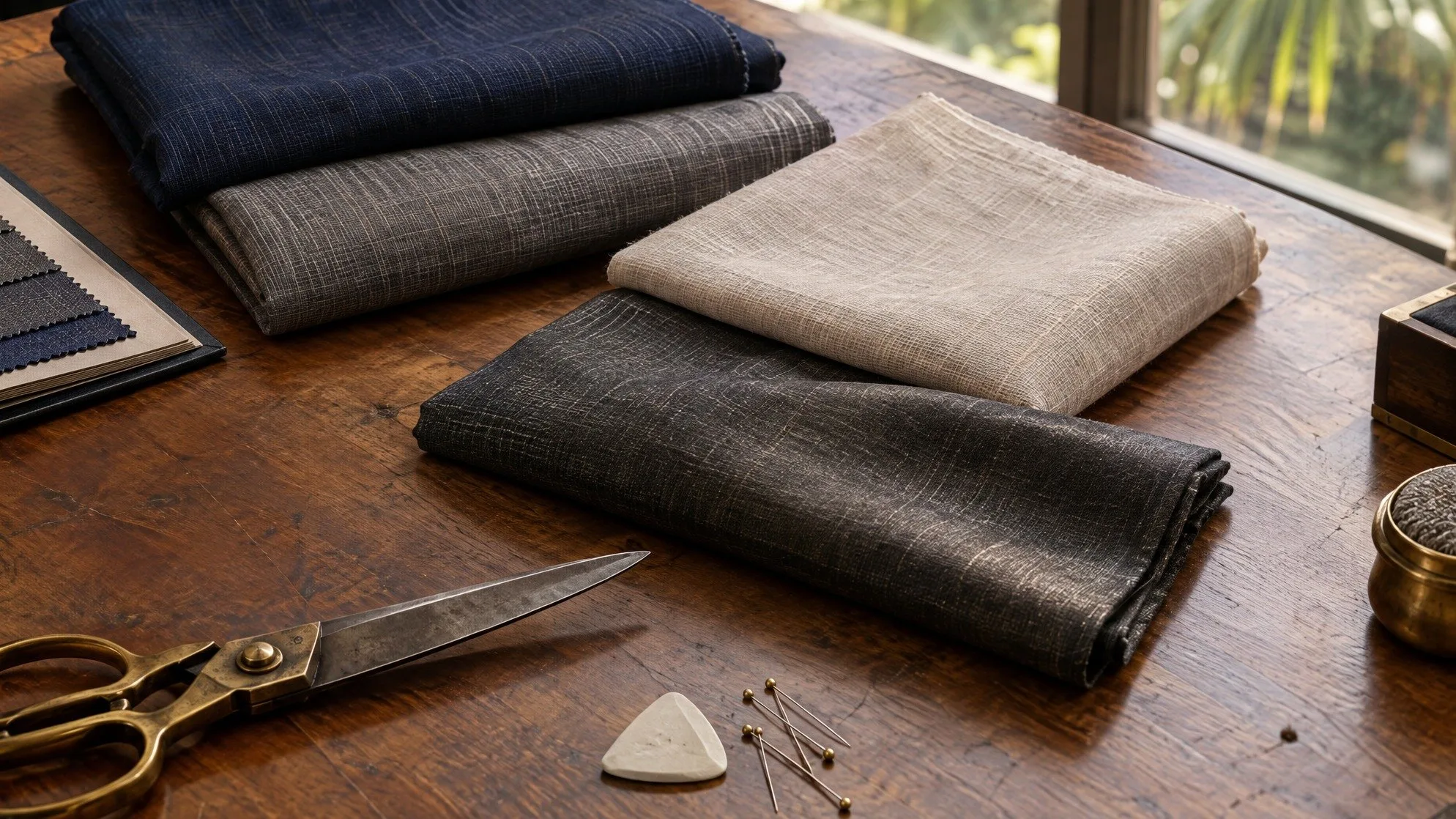
Jakarta asks more of a suit than any boardroom ever will. Between the morning heat, the humid afternoons and the air-conditioned chill of every office tower, your jacket must breathe, recover and still look immaculate at the end of the day. The secret begins long before the first fitting: it begins with the cloth.
For more than seven decades, our master tailors have dressed gentlemen who live and work in one of the warmest capitals in the world. If there is one lesson those years have taught us, it is this: a beautiful suit that is wrong for the climate will spend most of its life in the wardrobe. A beautiful suit that is right for the climate becomes the one you reach for again and again.
In this guide, we share how we help every bespoke suit client in Jakarta choose a cloth that is cool, crisp and genuinely wearable, without ever compromising on elegance.
Why Cloth Matters More in the Tropics
In a temperate city, almost any good wool will serve you well. In Jakarta, the margin for error is much smaller. A cloth that is too heavy traps heat. A cloth that is too fine creases the moment you step out of the car. A cloth that is too tightly woven feels stuffy, no matter how light it is on paper.
Choosing a tropical suit fabric is therefore a balance of three qualities that work together:
WeightHow heavy the cloth is per metre. Lighter cloth means less bulk and less heat.
WeaveHow open the cloth is. An open weave lets air pass through the fabric as you move.
Twist & FibreHow tightly the yarn is spun, and what it is spun from. This decides how well the suit resists creasing.
Get these three right, and the suit will look as composed at six in the evening as it did at eight in the morning.
Understanding Cloth Weight
Cloth weight is usually expressed in grams per metre or ounces per yard. As a general guide for our climate:
- Light (around 220–260 g/m): the natural home of the tropical suit. Ideal for daily office wear and outdoor occasions.
- Medium (around 270–310 g/m): more structure and drape. Excellent for suits worn mostly indoors, for travel to cooler cities, and for formal evening wear.
- Heavy (320 g/m and above): beautiful for overcoats and winter travel, but rarely practical for daily life in Jakarta.
Lighter is not automatically better. An extremely light cloth can lack the body to hold a clean line, especially through the chest and lapel. This is where the weave and the hand of the tailor make all the difference.
The Quiet Power of Twist and Weave
Many gentlemen first ask about the “Super” number of a wool, such as Super 110s or Super 150s. This number describes the fineness of the fibre. Finer fibres feel wonderfully soft, but they are also more delicate and tend to crease more easily.
For a hard-working suit in a hot city, we often look first at something less glamorous: the twist of the yarn. A high-twist yarn is spun tightly, sometimes from two or three plies twisted together. Woven into an open structure, it creates a cloth that feels dry and slightly crisp to the touch, breathes generously, and springs back from creases with remarkable resilience.
A great tropical cloth should feel a little dry in the hand. That crispness is the sound of air moving through it.— Laxmi Tailors cutting room
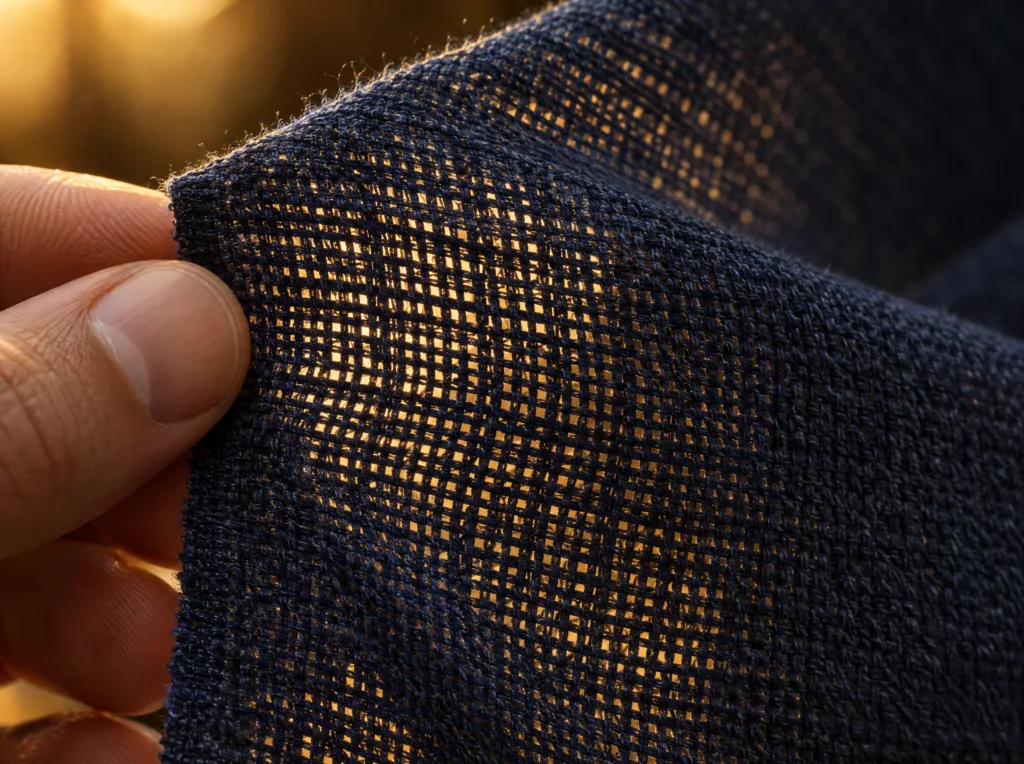
The best known of these cloths is fresco, a high-twist, open-weave wool that has been the quiet favourite of well-dressed men in warm climates for generations. Hold a piece of fresco up to the light and you will see the tiny gaps in its weave. Those gaps are exactly what keep you cool.
A Tailor’s Guide to Tropical Cloths
Every cloth has its own personality. Here is how we typically guide our clients through the cloth books at our ateliers:
| Cloth | Character | Best worn for |
|---|---|---|
| Tropical worsted wool | Light, smooth, versatile, keeps a sharp line | Daily business wear, the first bespoke suit |
| High-twist / fresco | Open weave, crisp hand, excellent crease recovery | Long days, travel, outdoor events |
| Wool & mohair | Cool, subtle lustre, very resilient | Evening events, weddings, black tie |
| Linen | Highly breathable, relaxed, creases with character | Daytime weddings, resort and weekend wear |
| Cotton | Soft, matte, comfortable, slightly casual | Smart-casual jackets and trousers |
| Wool, silk & linen blends | Texture and depth, light and breathable | Sports jackets and statement pieces |
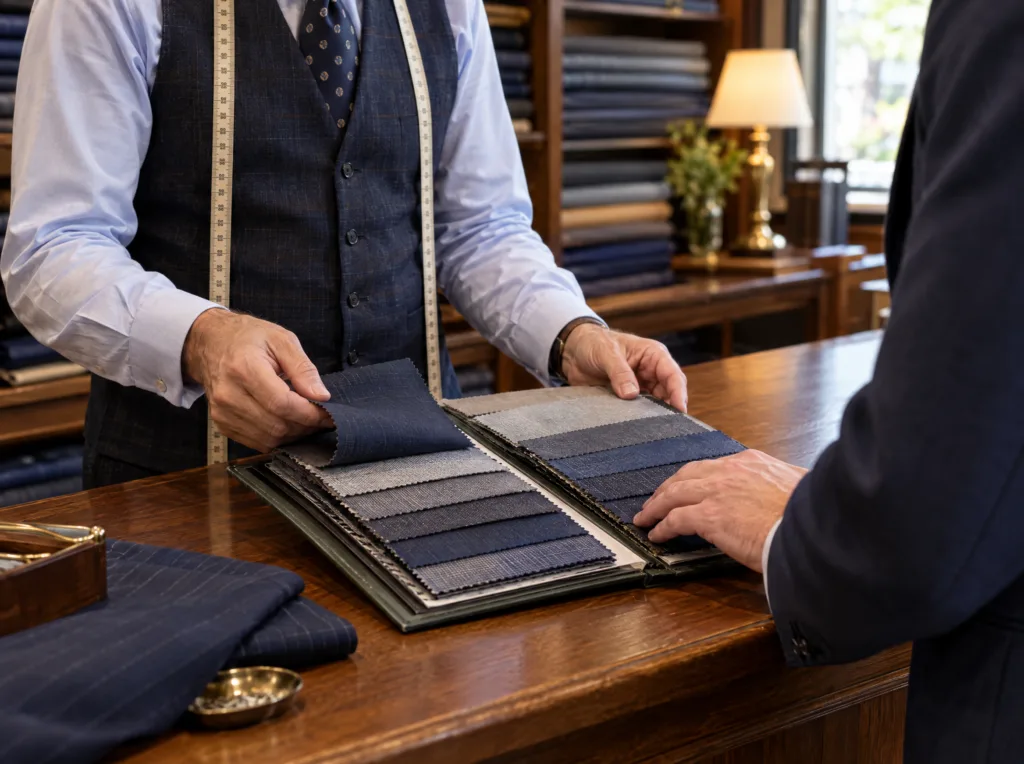
Many of our clients build their wardrobe in this order: a navy or charcoal tropical worsted first, then a high-twist suit for demanding days, followed by a mohair blend for evenings and a linen or cotton jacket for the weekend. Fine mills such as Holland & Sherry offer beautiful collections in each of these families, and our tailors will happily walk you through them, swatch by swatch.
Construction: Where Bespoke Makes the Difference
The right cloth is only half of the story. A true bespoke suit can also be built specifically for the heat, in ways that an off-the-rack suit simply cannot.
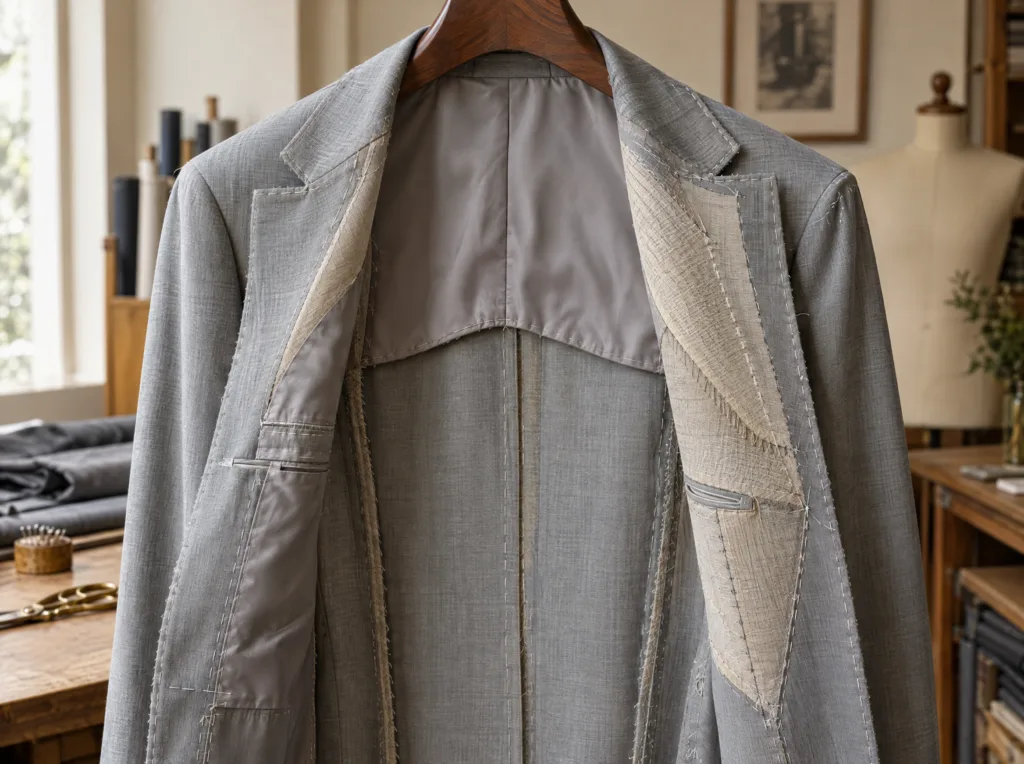
A lighter, floating canvas
Instead of glued (fused) interlinings, which stiffen the jacket and trap heat, a canvassed jacket uses a floating layer of natural canvas, shaped by hand. It moves with your body, allows air to circulate and moulds to your chest over time.
A softer shoulder
Reducing or removing heavy shoulder padding keeps the jacket lighter and more relaxed, while the cut itself still gives you a clean, confident silhouette.
Half or quarter lining
Removing part of the lining from the back of the jacket allows the cloth to breathe directly. It also showcases the internal finishing, which in a bespoke garment is a pleasure in itself.
Breathable lining materials
Where lining is used, we prefer breathable materials such as cupro, which feel cool against the skin and manage moisture far better than synthetic alternatives.
A Note on Colour
In bright tropical light, colour behaves differently. Mid-blues, soft greys, stone, tobacco and olive look natural and relaxed in daylight, while deep navy and charcoal remain the foundation of any business wardrobe. Lighter colours also reflect more heat, which makes them a wise choice for daytime and outdoor events, including garden and beach wedding suits.
Caring for Your Tropical Suit
- Let it rest. Give your suit a day off between wears so the fibres can recover their shape.
- Hang it properly. Use a wide, shaped hanger and allow the suit to air out before returning it to the wardrobe.
- Brush, don’t wash. A soft clothes brush and a gentle steam will refresh the cloth far better than frequent dry cleaning.
- Mind the humidity. Store suits in breathable garment bags, never plastic, to protect them from moisture.
- Trust your tailor. Small adjustments over the years keep a bespoke suit fitting like the day it was made. Our alterations service is always here for you.
Choose Your Cloth with a Master Tailor
There is no substitute for touching the cloth yourself. Visit any Laxmi atelier in Jakarta, Tangerang or Surabaya, and our tailors will guide you through weight, weave and colour to build a suit made for your life and your climate.
Book an Appointment WhatsApp +62 851-5603-2062Frequently Asked Questions
What is the best suit fabric for Jakarta’s climate?
For everyday wear in Jakarta, a lightweight, high-twist worsted wool with an open weave is the most versatile choice. It breathes well, resists creasing and keeps its shape. Wool-mohair blends suit evening and formal occasions, while linen and cotton are ideal for relaxed daytime and outdoor events.
Is a higher Super number better for a tropical suit?
Not necessarily. A higher Super number indicates a finer fibre, which feels softer but is often more delicate and creases more easily. For a hard-working suit in a hot city, the twist of the yarn and the openness of the weave matter more than the Super number.
Can a bespoke suit be made lighter for hot weather?
Yes. Beyond cloth choice, a bespoke suit can be built with a lighter canvas, softer shoulder, half or quarter lining and breathable lining materials, all of which reduce weight and heat while preserving the structure and drape of the garment.
Where can I choose cloth for a bespoke suit in Jakarta?
You can explore cloth books from fine mills such as Holland & Sherry with a Laxmi Tailors master tailor at any of our ateliers in Jakarta, Tangerang and Surabaya. Book a consultation via WhatsApp at +62 851-5603-2062.
Ready for a Fitting?
Visit any Laxmi Tailors atelier for complimentary advice, or schedule a private consultation.
Book Appointment →